
The Three Components of Business – People, Processes, & Technology

We’ve talked a lot about managing a practice and creating a successful patient experience. We’ve also demonstrated how we can operate our practices in the same manner as Big Business runs their operations to be more effective, thereby increasing our bottom line, decreasing no-shows, and achieving higher patient retention. Now, we’re going to go over how this all comes together in your daily practice through the three components of business – people, processes and technology. People – The people, i.e. your staff, are the first component of any business. You have to be able to answer the questions of “Who are the people I can rely on?” and “What are their strengths and weaknesses?”. Once you have answered these questions you will be able to assign responsibilities to each staff member that will ensure the most effective operation of your practice. Processes – Your “Processes” section will be extensive. This is where you need to have every task to complete a successful day broken down into simple steps. Imagine a new patient comes into your office. What actually has to happen? What do you say to them? What paperwork do they have to fill out? What different options will you present to them? Every single step has to be documented. This is where big businesses like the Ritz-Carlton really set itself apart by creating an unrivaled experience. You can too, if you are diligent about your processes. We talked before about how just to make the bed at the Ritz-Carlton, the housekeeper has to complete over 30 steps on their checklist. The process is broken down into these tasks to make sure that every bed is perfect, every time. By simplifying your processes into each of the component steps needed to achieve perfection, you can manage your patient experience at the highest possible level. Technology – The final component of business that brings it all together is technology. Without proactive software capable of finding the tasks needed to be completed and assigning them to a staff member, companies like Amazon and Zappos would not be known as the leaders of the customer experience that they are today. Thanks to the technology they employ, the Ritz-Carlton can keep track of each and every preference of their guests, down to how they like their steak cooked. They know you are coming and know your name before you even step out of your car. Without their technology, achieving their “Gold Standards” would be much more difficult, less scalable, and harder to track for the Ritz-Carlton The technology component of business is vital to bring the people and process parts of the business together. It automates the tasks and makes it simple for the people in your business to follow the steps you have created. And, it makes following the three rules of managing a business or team effectively that we talked about last time achievable, through processes of quantifying, delegating, and verifying. People, processes, and technology…these three components of business must function together at the highest possible level for you to create the best patient experience possible. When you have the right staff members assigned to the tasks that best suit them and each part of your processes broken down into the number of tasks needed to complete them successfully, you have started on the right track. Adding in the final component, a proactive technology, brings it all together and manages the tasks of quantifying, delegating, and verifying. Now, there is no limit to the success of your practice. Don’t miss our next post where we’re going to talk about how to start the journey of creating both your dream practice and your dream life.
The Power of Proactive Technology In Practice
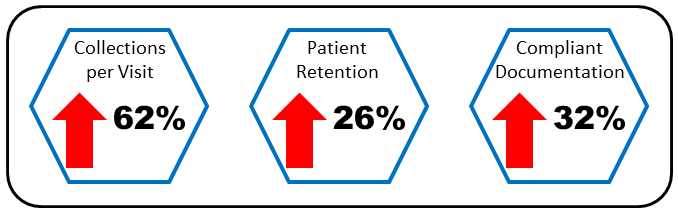
Last time, we talked about the pitfalls of using a reactive system to manage your Chiropractic office. We illustrated how a reactive technology is inefficient in managing the patient experience.. We also talked about how using such a reactive technology is viewing your office through an antiquated paradigm, similar to how patients view their health prior to discovering the power of Chiropractic. These patients would never believe the amazing effects Chiropractic can have on their health and their lives until they look at it from a new paradigm. In the same way, if you are currently using a reactive system, you may not be able to see how just changing the software you use to run your office can result in dramatically improved management of the patient experiences, with 62% higher collections per visit, 26% better patient retention, and 32% higher documentation compliance. By taking a reactive system and shifting it to a new paradigm, a proactive technology, management of daily tasks becomes easier, more effective, and more transparent. With a proactive technology, all of the tasks to complete a successful day are automatically discovered by the artificial intelligence in the software, assigned to the appropriate staff member, and you can easily see whether all the tasks of the day have been completed or not, all in one report. We call this single-metric management. The total number of tasks in motion across your entire staff at any given moment. Once a task is assigned to a staff member, that person owns the task and anywhere there is internet access, you can log in a see the number of tasks each person owns. This builds both accountability and teamwork. You know immediately if someone is falling behind in their tasks and needs assistance. Is that person just not suited to this specific task? Are they overwhelmed? Do they need training? Are you understaffed? With a proactive system, you can see the issues in real-time, make educated decisions and adjust as needed. By making sure that each task is assigned to the most qualified staff member and knowing whether or not they have been completed, it takes the guesswork out of management, fosters teamwork, and saves countless hours wasted digging through reports. It makes sure that everything that needs to be done is done on time and by the person who can do it most effectively. Every aspect of running a practice is completed at the highest level of efficiency. With a new proactive paradigm like that, those incredible increases in profits, retention, and compliance, the proven results I mentioned earlier, become more readily understandable. Shifting from a reactive system to a proactive technology is a simple step that leads to powerful results. Next time, we are going to discover how changing your paradigm and implementing a proactive technology makes management exponentially easier by adhering to the three rules of managing a business or a team – quantify, delegate, and verify.
Defending the Subluxation

Learn how you can join a group of chiropractic warriors that have a vision to bring chiropractic subluxation adjustments to every family on the planet!
Are You Understanding True Chiropractic Philosophy?

When you understand the true Chiropractic Philosophy, your practice will explode with patients. Can you handle it?
Proactive Technology for a Proactive Profession
Chiropractors are by our nature proactive. For our patients, Chiropractic is a new way to look at health. We educate our patients about the necessity of caring for their spine and nervous system in the prevention of health problems. It is therefore ironic that the one area where this has not been true has been in the technology and software we have used to operate our practices. This one area that is vital to the health and success of our business has instead been relegated to old methodologies, old ways of building technology, and ineffective, reactive approaches. So, what does it mean to have a proactive technology? How can changing from a reactive to a proactive approach improve the management of the patient experiences and result in 62% higher collections per visit, 26% better patient retention, and 32% higher documentation compliance? Let’s look at it from the same perspective as a patient being introduced to Chiropractic for the first time. Do they think it’s possible, when they come in for their lower back pain, that what they are about to learn could totally revolutionize their health? No. Do they know that it could improve the function of their body and therefore alleviate the headaches they’ve had all their lives, improve their child’s asthma, and lower their husband’s high blood pressure? Of course not. They don’t even think it’s possible to get those kind of results because they have an outdated health paradigm, or an outdated technology. They are looking at it from a reactive paradigm. Yet, when these same patients are educated and begin to learn about the spine, the control the nervous system has over the functioning of their bodies, and the way Chiropractic benefits their overall health, then it all starts to make sense. From their new proactive paradigm, they are able to understand and achieve improvements in their health that they would never have thought possible before. It is the same when you look at the technology used to manage your Chiropractic office. With the out-dated, reactive system used in so many practices, you have to go find what work needs to be done before you can do it. If you want to follow up on an insurance claim, you have to go to some aging report, find the claim, and then work through the steps. This means you have to probe and actively go find the work before you do it. No one knows, including the owner, how much work was supposed to happen that day versus how much actually did happen. You have cash flow reports, no-show reports, no future appointment reports, expired care plans, compliance reports, billing reports. The list of reports to check the work of a single day is exhausting. Even worse, this type of system leaves you always reactive. You are never preventing problems and encouraging growth. You are just putting out fires. But, with a proactive technology, your office operates from a whole new paradigm. In my next post, I will walk you through and demonstrate how this new proactive paradigm leads to the proven results I mentioned earlier – higher profits per visit, retention, and compliance.
Chiropractic hacked email
Learn what to do if your email is hacked and how it affects HIPAA compliance with this short webinar.
Episode 000 – The Ups and Downs of Starting and Growing a Successful Chiropractic Practice

No one ever said growing a successful practice was easy, but if you work hard enough for long enough it will eventually pay off. Listen to Dr. Tabor Smith, the host of Practice Growth Strategies, as he walks you through the ups and downs of growing his practice. You’ll discover how he almost lost it all, but out of sheer determination, re-built his practice from the ground up and turned it into a thriving Chiropractic office. Practice Growth Strategies is the official podcast of Genesis Chiropractic Software. Subscribe to us on iTunes and stay tuned for more Practice Growth Strategies! Transcript Text: Announcer: Welcome to Practice Growth Strategies, bringing you tips and strategies from the best in the business. To find exclusive work flow, scheduling documentation, billing and all of the tools your practice needs in one easy-to-use platform visit GenesisChiropracticSoftware.com. Here’s your host, Dr. Tabor Smith. Tabor: Hello and welcome, ladies and gentlemen, to Growing Practice Strategies. I’m your host, Dr. Tabor Smith. On this first episode, I just wanted to really welcome you here. I wanted to share a little bit about myself and also what we’re going to be doing with Growing Practice Strategies. I have been very privileged over the course of my career. I’ve been a chiropractor for eight years now, and for the last few years I’ve been privileged enough to be able to do a lot of webinars. I’ve done well over 100 webinars with some of the brightest, some of the smartest and some of the most gifted people in our profession, the wonderful profession of chiropractic. I’ve also been privileged and blessed to do webinars for an amazing company called Genesis Chiropractic Software. If you haven’t checked out GenesisChiropracticSoftware.com, I highly recommend you do that. I use Genesis in my office. It’s an amazing software. I know some of the biggest offices in the world and some of the best chiropractors in the world use Genesis as well, so I highly recommend you look into it. Let me just mention a name. One of the big guys at Genesis is Brian Capra. What a great guy. He is a good friend of mine. He has asked me to host this podcast on behalf of Genesis. He has lined up an amazing list of speakers. As these episodes unfold, I want you to subscribe. I want you to make sure you’re listening to every single one because there’s going to be some tips, some jewels, that you’re going to get out of these episodes that could literally spring your practice forward years in advance. I think you’re going to find huge value in these. Let me start off by telling you a little bit more about myself. I graduated from Parker Chiropractic School. When I first got out, I actually went back to New Mexico and worked for a little while back in New Mexico for about six months. I was going to buy the office that I was working in. That office was for sale. I decided to go back and get a job there and then I would work into buying that practice. It fell through. I believe in our life that failures matter just as much as successes, and I think if you probably looked at your life as well you’d probably see that there are some failures there that you’d look back and say, “Thank God that it didn’t work out.” It’s the same thing with me. I was so glad that I wasn’t able to buy that practice. What happened then was I was able to get another job as an associate chiropractor in Amarillo, Texas, for an amazing chiropractor. Some of you might even know him, Dr. Shane Hand. At the time, we had probably one of the biggest chiropractic offices in the State of Texas and I got to work for him. That’s where I learned the principle of chiropractic. I learned just the power in the adjustment. It was absolutely amazing when I saw life change in front of my eyes. I think it’s okay to say this. We were part of WLP, Dr. C.J. Mertz was a coach there in that office. He’s a great guy. I think it was about after three months of care the person would come back for a group re-exam, basically. It’s where you get the group together and you do another mini doctor’s report just to kind of set those people back on the path of understanding their care and understanding why they are getting adjusted at that office. At that three-month mark there would always be four or five people in this little group re-exam, this group report of findings. What Dr. Shane would do is he would ask each one of these patients what their experience was so far in the office. In front of everybody, in front of the whole group, he would say, “What is your experience? What have you noticed in your three months of care?” I remember 99% of the people in there would have some kind of improvement. Something was better. Some of them would even be absolutely miracles and amazing. I remember sitting there as a chiropractor, just a year out of school, thinking, “Wow.” I had an amazing experience where I could barely walk. I had numbness and pain shooting down my legs, and chiropractic changed my life when I was a teenager. That’s what made me want to go to chiropractic school. When I was able to see that happen in so many people’s lives in such a large practice, that’s when I realized that chiropractic was an amazing thing and that I was extremely blessed to be a chiropractor. I worked in that office for two years. I loved it. Dr. Shane is still a mentor of mine. Then my wife and I, Dr. Gina Smith, moved from Amarillo to Houston, Texas. We decided to open our own practice. We’ve been practicing here in Houston
Chiropractic Philosophy
Learn how to strengthen your chiropractic philosophy and become a more principled chiropractor with this short webinar.
The New Chiropractic Technology I Found That Changed The Way I Practiced Forever
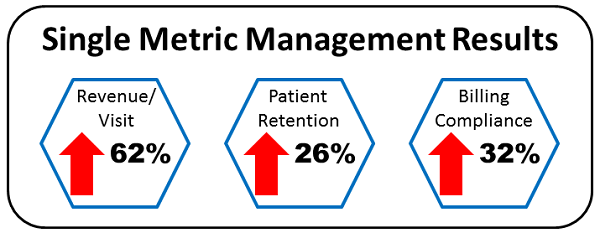
I have told you the story of how losing a patient led me to focus on the patient experience. We’ve talked about how Big Business is using technology to manage and improve their customer’s experience and why Chiropractors have fallen behind, unable to compete without the same enterprise level technology used by the Big Boys. Now, I would like to explain how I was able to gain access to that same enterprise level, multi-million dollar software and implement it not only in my own practice but to begin offering it to other chiropractors who want to quantify and improve their own patient care experience. As I was searching for ways to improve our patient care, I tried implementing the other chiropractic technology that was available. What I found was that it was antiquated in its processes and impossible to use to keep track of any real metrics that would allow me to make improvements. We would still lose a patient and I would go to one of the reports available in the software, find no-shows, expired care plans, or one of the dozens of other reports I would have to search through to discover what went wrong. Then, my staff and I would focus on the reason that patient was lost until we lost another patient for a different reason. It was basically management by fire and it is not how real businesses operate at a high level. That is when I had the good fortune to meet a former CIO of a top-five financial firm on Wall Street and his son who was a Princeton grad with a computer science degree. They were building chiropractic billing software for insurance billing and as soon as I saw what they had accomplished, I knew we needed to deploy it in my clinic. We implemented it in my office alone and my collections doubled. Even more important, it actually leveraged web-based technology and artificial intelligence, learning over time to find necessary billing tasks and delegate them automatically to the right staff member. This meant that my staff and my billing team no longer had to search through piles of reports to find out what work had been done and what had fallen through the cracks. This new technology was allowing us to use the workflow methodology. The system could now find patients who were at risk of being lost. A no-show would become a task assigned to one of my staff members. An expired care plan would be delegated to the appropriate person. A daily SOAP note that was not signed by the doctor would create a task assigned to be handled. That meant that at any moment, my staff and I could see exactly how many tasks were outstanding to manage our patient care experience at the highest level. Now remember my patient Chris. When I saw how this technology drastically changed my billing departments results, I knew I had the answer to helping other doctors with the same patient experience problems that resulted in losing Chris. We began building upon the billing workflow methodology and expanded it to the overall patient experience. The reality is there are three main categories of work every practice has to perfect to improve the overall patient experience. Not just insurance billing. Insurance billing is a subset of main category number one which is Revenue. Other subsets of revenue workflow include cash collections/recurring payment and inventory management for example. The three main categories of the patient experience are Revenue, Retention, and Compliance. I will go into each of these in more detail in future posts. Our new enterprise level technology was automating these three main categories and boiling it down to a single number. The number of tasks that needed to be completed by the end of the day for the perfect patient experience. It was no longer management by fire. Instead it had become single-metric management. Either the number of tasks left to do was zero or it wasn’t. Either every task to make our patient care experience the best it could possibly be had been done or they hadn’t. And, if a task had not been completed, I could immediately see what the task was, who it was assigned to, and follow-up. No more digging through reports. What does this mean to the average practice? Today hundreds of practices across the country are using this new Single Metric Management Methodology and seeing the same benefits I did. Specifically, an average increase in Revenue/visit of 62%, an average increase in Patient Retention of 26% (Average visits a patient is seen before leaving the practice), and an average increase in Compliance of 32% (Documentation and Billing). In future posts, I’ll go over in detail the data analysis we did that proves these numbers. Some “side effects” of Single Metric Management include a drastic reduction in wasted staff hours looking for work, an overall improvement of staff satisfaction, and conversely, a decrease in staff turnover, a decrease in management hours since many meetings are now eliminated, and an increase in a provider’s free time to do with what they wish. Most importantly providers are able to deliver a patient experience that rivals the customer experience seen in the best businesses in the world. The operations of my office had become efficient, effective, and scalable thanks to the implementation of this new single metric management workflow methodology. We had moved from being reactive, trying to fix the problems after losing a patient, to being proactive and making sure everything was done in real time to keep our patients. It became crystal clear that leveraging enterprise level technology to quantify and improve the patient experience had the power to completely change the way chiropractic offices function, decrease the stress of management, enhance patient retention, and above all, improve the care or experience patients received.
Genesis Chiropractic Software Webinar Teaches Three Key Practice Compliance Skills

Industry leaders unveil tested strategies in chiropractic practice management software to increase office compliance and save practice owners time and money in this short new webinar. Genesis Chiropractic’s new short webinar reveals three most effective methods to increase compliance in the office, thus saving chiropractors time and money. The webinar is available online, and can be watched or listened to on a computer here at any time. “Ninety healthcare providers were charged with compliance violations reaching $260 million in billing in May 2014. A growing number of practices are subjected to audits and penalties,” says Reuven Lirov, Chief Practice Growth Officer at Vericle. “Chiropractic practice owners too struggle to maintain compliant practices against a tangled web of regulations from insurance companies, the government, Medicare, and Medicaid.” Each of those unbilled visits would be marked as a “fail” in the audit, with a resulting penalty of $10,000 per line item. According to Lirov, mistakes and oversights in the office are a regular occurrence in most healthcare practices. “Chiropractic office practice managers face difficult problems posed by compliance issues such as the increased risk of audit failure, growing compliance complexity, and lack of time to learn and implement new procedures based upon new rules,” says Lirov. Lack of compliance is a serious issue that can lead to substantial loss of revenue and fines. For example, a chiropractic office might see 100 patients a day, or approximately 25,000 patients a year. Suppose just 0.4% of those visits (100 visits) are undocumented. Each of those unbilled visits would be marked as a “fail” in the audit, with a resulting penalty of $10,000 per line item — or $1 million in audit penalties. “Better compliance liberates chiropractic practice owners from worrying about fines and audits, and lets them get back to treating patients,” says Lirov. “Chiropractic practice management software helps practice owners stay compliant and grow. Our average clients have seen substantial growth in their practices including an average revenue growth of 186% and patient growth of 141%.” [vc_video title=”Dr. Greg Loman D.C. talks about compliance.” link=”https://youtu.be/i0slFN2U1GA”] “We’re in a compliance era in which we must really become compliant,” says Dr. Greg Loman D.C., an accomplished physician, a high volume practice owner, and a co-founder of Maximized Living. “In my opinion it is just necessary that you use Genesis Chiropractic Software by Billing Precision not just a for compliance but for just how amazing their product is.” Continuously increasing compliance requirements and lack of time do not excuse chiropractic practice owner during a practice audit. This short thirty minute webinar teaches the three most important practice management skills to save a chiropractic office and avoid audit failure penalties. The webinar includes a demonstration of Genesis chiropractic practice management software. It contains automated features to discover the most frequent documentation errors that lead to compliance issues, such as undocumented visits, unsigned notes, and late billing. The software is also browser-based, so it can be changed as the law changes without inconveniencing the practice owner. Click here to sign up for the free webinar and find out more information. About Genesis Chiropractic Software and Billing Precision, LLC Genesis Chiropractic Software by Billing Precision, LLC was designed by chiropractic business owners with both patient relationship management and practice profitability in mind. Genesis software provides a complete chiropractic practice management system that supports every role in a busy chiropractic practice, from the owner and practitioners to the front desk and back office. It automates the vast majority of standard tasks, including patient relationship management, revenue cycle management, compliance and office management. Its exclusive workflow functionality continuously improves productivity, control and predictability, fostering teamwork and time savings, which leads to greater profitability and practice growth. Visit https://genesischiropracticsoftware.com for more information.
