
Harness the Power of Genesis Chiropractic Software
Harness the Power of Genesis Integrated Practice Management and Billing Software for Chiropractors. With Genesis, you get all of the tools your practice needs in one easy-to-use platform. From automated claim management and task delivery to an average of 168% increase in revenue, if you’re ready to harness the power of integrated practice management and billing, Genesis Chiropractic Software will bring your entire practice experience together. The result? More revenue, more retention, and a practice management strategy that actually works. With Genesis, you get all of the tools your practice needs in one easy-to-use platform. Our solution is a combination of best–of–breed technology and scalable business processes. By integrating all facets of your Practice Management with Billing, you virtually eliminate errors between scheduling a patient, documenting the visit, generating the claim, and getting your reimbursement. This gives you: Increased Practice Revenue Whether in-house or outsourced through one of our incredible teams, Genesis billing takes the headaches out of collections. With Genesis, you get over a dozen teams working for you round the clock to follow up on claims and ensure maximum clean claims with maximum reimbursement. Plus, our built-in auto-prioritization means the system decides what needs to be followed up on by using over 21 MILLION different rules updated daily. Increased Patient Retention Genesis makes sure your patients have smooth and positive experiences whether dealing with cash or insurance, so they keep coming back and referring their family and friends. Our system gives you real time updates to claim balances so that statements are always current. Any patient questions are answered with a single click. For you, that means, no more sifting through pages and pages of data to find a simple claim update or balance owed. Increased Visit Compliance When you use Genesis Chiropractic Billing Services, you know immediately when your practice is at chiropractic billing risk with over 21 MILLION rules checked against your chiropractic practice’s actions in real time. Claims are also submitted with the highest clean claims rate and fee schedules are reviewed multiple times a year to ensure maximum compliance and reimbursement for you. By integrating our practice management software and chiropractic billing services, you get the best of all worlds – our exclusive workflow, scheduling, documentation and billing – to skyrocket your practice success. Here’s what real practices like yours have to say about Genesis: “Genesis makes my life and job as a biller and collector much more easy! Claims get processed in less than 15 days. Denials show immediately, the provider claims workbench is very friendly and easy to work. Electronic posting is very accurate. Questions and tickets are responded within 24 hours. I can’t not tell you enough how awesome this system is,” says Liliana Suarez. And, Patti Straface adds, “I am the office manager and have been using Genesis for 8 years now. Genesis makes my job a whole lot easier by helping me streamline the billing and payments, I like the fact the system is linked with cash practice and saves time with posting payments. I look forward to the monthly accountability calls, it is good to have that exchange of information. I have referred Genesis to other offices.” With Genesis, you no longer have a single person supporting your billing, but multiple teams dedicated to helping you succeed. By integrating our practice management software and chiropractic billing services, you get the best of all worlds – our exclusive workflow, scheduling, documentation and billing – to skyrocket your practice success.
About Your Data Security & Liability
What Software Companies Don’t Want You To Know About Your Data Security & Liability 8 secrets they keep and the truth you need to know For Your Data Security: What are the two types of systems? Do you still own your data if it is stored in the cloud? Will you be able to access the data if you switch chiropractic software companies? Can a cloud based company hold your data hostage if you leave? Where is my data safest? Where is the easiest place for a hacker to get data? Is there any liability if your data is stolen? Will the government ever really enforce these laws?
5 Advantages of Genesis
5 Advantages Genesis Brings to Your Practice that Put You Ahead of the Game Your practice is your financial lifeblood. If it’s not healthy, neither are your personal finances – the income you and your family rely on. That’s why when you look at instituting any new system in your office, you must weigh the pros and cons to determine which one brings you the most advantages for the least downside. And, that’s why we here at Genesis have created our Genesis Chiropractic Software and Billing services to do just that. In fact, let’s take a look at what our customers say about the pros and cons of Genesis. Dr. April Lundy of Harmony Chiropractic Center says, “The customer service is great! They are very timely and easy to reach for help. “Help Tickets” are answered quickly and efficiently. Billing is great. (I’m) able to see how services are being paid.” And goes on to say, “Claims go out fast, but the best part is knowing right away if something did not go through. This was a problem with past billing – it took a month to see a denial or something missing.” So far as cons go, Dr. Lundy answers, “Visually it is not as appealing as some other software.” But, she says, “If (you’re) doing a good amount of billing out to insurances this a good software to have. Syncs up to posture screen and insight which is great.” Now, let’s see what Dr. Cheonil Park from Adio Corrective likes best about Genesis Chiropractic Software… “I love Genesis since I can use the software with any computer with internet access. It is a cloud based system!! Also, I am a CBP doc. Genesis works great with posture ray and posture screening!!” says Dr. Park. What he likes least? Dr. Park answers, “Software speed is based on the internet speed. My clinic location has some issues with the internet.” But, Dr. Park says, “If you love CBP technique, you need the Genesis software.” So, for these two docs, the 5 advantages Genesis offers include: Great customer service Easy, efficient billing with claims that go out fast Syncing to posture screening Ability to connect from any computer with internet access Perfect for doctors using CBP as well as other techniques And the only things they aren’t quite as happy with? Just that Genesis may not be as visually appealing and that the internet in their area can be slower. Not bad in our book. Thanks so much to Dr. Lundy and Dr. Park for their glowing reviews! And, these are just two of Genesis Chiropractic Software’s satisfied customers. For every doctor, Genesis offers benefits that just can’t be beat because our software was designed by chiropractors for chiropractors. So, when you’re choosing a practice management and billing system for your office, look for the software that offers the most advantages with the least downside – Genesis Chiropractic Software.
Genesis Kickstart
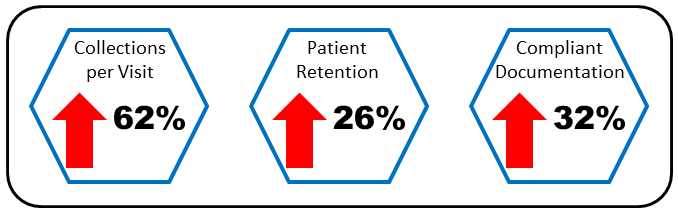
Why You Should Kickstart Your Chiropractic Practice with Genesis Here at Genesis, we work with a lot of doctors who are ready to improve their practices, pull their documentation into compliance and better handle both their staff and their patient experience. But, Genesis is just as important for new practices. In fact, using Genesis from the very beginning can allow your practice to launch faster, better and with less challenges. That’s why we created our Genesis Kickstart program. You see, we understand that new doctors don’t always have the financial resources they need to get the best of the best, like Genesis. After all, they often have not only loans to cover build out, imaging equipment, tables and more but many times large student loan debt hanging over their heads as well. But, we didn’t want these doctors, who are the future of chiropractic, to have to sacrifice quality in the name of saving money. With Genesis Kickstart, they don’t have to. With the Kickstart program, new practices are able to access over 20 vital practice tools for one very low monthly fee. These tools allow them to power their entire practice and grow faster than they dreamed possible. In fact, statistics show that new practices that use our Chiropractic Software have proven increases in revenue, patient retention and compliance. But, you’re probably wondering how much Genesis helps. Well, here are the hard numbers. our Chiropractic Software delivers a 32% increase in documentation compliance, a 26% increase in patient retention, and a 62% increase in revenue. This makes Genesis a game changer for a new practice. Because we want to be part of shaping the future of chiropractic as a partner with these new practices, we’ve set the fee for our Kickstart program incredibly low. For just $97 per month practices are able to access the amazing benefits Genesis delivers. This makes Genesis a game changer for a new practice. But, because we set the price so low, we also had to set a cap on who we could accept into our Kickstart scholarship program. For now the Genesis Kickstart program is only available to new practices at or under $60,000 in funding and revenue per year. This allows us to help these practices become successful right from the very beginning. If you’re just starting out and want to access the incredible gains in documentation compliance, patient retention and revenue Genesis delivers, then don’t wait. Apply to the Genesis Kickstart program today. Genesis is not only a highly valuable and rewarding platform for start-ups, it will help you mold your practice into the picture of success. Whether you’re in the development phase or looking to start generating more patients, Genesis is something that can help you succeed online and especially offline in your practice.
The Top 3 Reasons to Start with Genesis Software
The Top 3 Reasons to Use Genesis The new year is here and with it, most people are making their resolutions for the coming months. As you decide how you will make 2017 the best year ever, I want to challenge you to take the step that will transform your Chiropractic practice, enhance your patient experience, boost your bottom line, and take the stress out of your day-to-day management by leveraging Genesis Chiropractic Software in your practice. Here are the top three reasons you should start 2017 with Genesis Chiropractic Software: Reason #1 – Proactive Technology If you are using an outdated Chiropractic software based on a reactive type of technology you are missing out on the benefits you could be seeing. With a proactive technology, like Genesis Chiropractic Software, all of the tasks that must be completed each day for your practice to be successful are automatically discovered by the patented artificial intelligence in the software, assigned to the appropriate staff member, and you can easily see whether all the tasks of the day have been completed or not, all in one report. By making sure that each task is assigned to the person best able to complete them and knowing whether or not they have been done, it takes the guesswork out of management. It makes sure that everything that needs to be done is done on time and by the person who can do it most effectively. Every aspect of running a practice is completed at the highest level of efficiency. Reason # 2 – Higher Patient Retention Putting Genesis to work in your practice also translates to higher patient retention because it allows you to manage the mission critical points of your practice. Mission critical points are ones where you take the chance of losing a patient, points where you must take action immediately or the patient is likely to discontinue care. Unfortunately, these points are also ones that are difficult to discover and handle in a timely manner in reactive systems that require you to search multiple reports just to manage a single day’s activities. Let’s take no-shows as an example. What does a no-show really mean to not only your business but to your patient. If a patient was going in for chemotherapy and they had to miss a visit, would they be waiting for you to call them to reschedule that visit? Absolutely not. Would they walk out of chemotherapy forgetting to schedule their next visits? Or, would they reach the end of their treatment, get their testing done, and not follow-up to get their doctor’s recommendations for the next phase of their care. Never…it is too important to them. So, when a patient in your chiropractic practice no-shows for a visit, walks out without a future appointment, or is not excited about their re-exam, what are they telling you? They are telling you that they don’t value their care. It is no longer important to them. With Genesis, you are alerted when these mission critical points, like a patient no-show, occur so that you can take immediate action to preserve the patient relationship. This is vital to both the health of the patient and the financial health of your practice because according to Harvard Business Review, it costs you five times more to get new patients than it does to retain patients you already have. Reason # 3 – Eliminates Memory Management If you are using one of the old reactive types of systems to manage your practice, you are most likely relying on reports to make sure that everything is completed like it should be. The problem with this, as you know, is that it leaves you searching report after report. If you wanted to follow up on an insurance claim, you have to go to some aging report, find the claim, and then follow up on it. That means that you have to probe. You have to actively go find the work before you can do it. Then, no one actually knows how much work was supposed to happen for that day, as opposed to how much work did happen. You may find out that an x-ray reprt that was supposed to be performed wasn’t. Then, three months later, you find out that a hundred x-rays weren’t done. This leaves the owner of the practice totally out of control. It leaves you memory managing every single thing that happens. It leaves you stressed out when you leave the office, trying to remember if everything was done to make the day successful. Furthermore, it puts additional stress on your staff and can damage the relationship with your patient. Genesis eliminates the burden of memory management. With our proactive chiropractic software, you never have to guess whether or not a task has been done. You never have to wonder whether a follow-up was completed, a bill sent, or a no-show rescheduled. With Genesis at work in your practice, when you go home at night, you can leave the office at the office. It All Boils Down to the Numbers The benefits Genesis Chiropractic Software offers your practice can all be boiled down to the numbers. With Genesis, you can not only dramatically improved management of the patient experience, you can also achieve 62% higher collections per visit, 26% better patient retention, and 32% higher documentation compliance. This means that leveraging Genesis Chiropractic Software in your practice could make 2017 your most profitable year ever, ease the stress of day-to-day management, decrease the burden on your staff, and result in the highest quality care for your patients.
Genesis Chiropractic Software Has Made Life Easier

Patient Retention With Genesis Chiropractic Software Has Made Life Easier for This Chiropractor In our last blog post, we looked at a just a couple of the success stories Chiropractors have experienced using Genesis Chiropractic Software in their practices. Today, I wanted to take you to the office of Dr. Charles Majors. Dr. Majors has a high-volume practice, with 1,500 patient visits each week. Leveraging the power of Genesis in his practice has allowed him to increase patient retention, collection, compliance, referrals, and more. According to Dr. Majors, Genesis has, “allowed our collections to go up.” Since he no longer has to worry about collections and the practice’s cash flow, he can stay focused on what’s really important – his patients. “As a chiropractor, my number one thing is putting my hands on patients and changing their lives… not having to worry whether the money is happening. With Genesis and Billing Precision, it’s like having an amazing C.A. (chiropractic assistant) in your practice, who is collecting and getting it done.” Genesis has also helped Dr. Majors improve patient retention. With Genesis, he always knows exactly where a patient is in their treatment plan. He can pull up their x-rays and go over them with the patient and says that Genesis is quicker and more efficient than his previous system. “I can look right at the screen and know if the patient has missed an appointment. I know that instead of being three times a week, they’ve been two times a week. If I can move them to three times a week – like they should be – it saves their life and increases collections.” Genesis Chiropractic Software makes it easy because when patients scan in at the front desk, if they are missing appointments, a red screen pops up. Dr. Majors’ staff immediately know to talk to the patient about scheduling their visits. Dr. Majors says, “Since we’ve gotten (Genesis) and Billing Precision, patient retention is better. Patients are staying longer… compliance is better.” With patients staying on schedule with their treatment plans and remaining in care longer, collections are way up for Dr. Majors, all without him having to work more to get it done. Another benefit, he has seen has been an increase in referrals for his practice. Dr. Majors attributes this to the fact that since patients aren’t missing visits, they are getting better faster and telling others about it. According to Dr. Majors, there are also hidden benefits to having these systems in place. He says, “When collections go up and volume goes up, C.A.’s are happier and life gets easier.” Dr. Majors has seen the power of Genesis Chiropractic Software at work in his practice. From increased collections and patient retention to happier patients, who refer more, Genesis has helped transform his high-volume practice and make life easier for him and his staff.
Genesis Patient Accounts Can Have Multiple Active Care Plans
Multiple Active Care Plans for Each Patient are Possible. Accurate patient care plans enable you to predict future income and keep track of insurance and cash payments. What if you have more than one provider in your office? What if you have a multi-specialty practice with Physical Therapists, Occupational Therapists, MDs, and Dietitians for weight loss? It’s possible to keep track of all of their scheduled visits on one care plan listing all of their visits, but it’s more complicated. It’s better to schedule separate appointments on their various schedules and then create a care plan for each specialty. That’s the simple way to do it. If you want to complicate things, then you can try to have their care plans combined into one or put it all on one from the beginning. So it is possible but there will be more details to pay attention to. Watch this Free Webinar to find out more from Jason Barnes, and to see exactly how care plans work. Enter your information and watch it immediately below. Read the transcript: And so today we’re talking about how you can actually manage a practice where you have patients that are coming in for more than one specialty. Now, this specialty requirement does not mean that it has to be something fancy. You can have somebody who has a care plan for acupuncture, a care plan for massage therapy, a care plan for chiropractic but this is where we’ve seen it more useful is where practices have opted to use multiple active care plans for physical therapy, for MD’s, for weight loss, for nutrition, or detox, for chiropractic and some of which are all of the above and more. So the why we’re doing this is, care plans are great. They do lots of great things for you but we’re gonna actually get into the old care plan versus the new care plan and why you should use the old one and why you should use the new one and what their differences are today. So that is the goal of today’s discussion. So when we start talking about a care plan, why on earth do you want to actually use a care plan? Now, this is a situation where it really doesn’t matter if it’s a cash patient or an insurance patient. When you have a new patient that walks through the door, and they’re gonna enter Care, the main reason for doing a care plan has to put a financial agreement in place with that patient that says, “Okay. Over the course of the next 10 weeks, you’re gonna come in for 60 visits and we are going to agree to pay this much money for your care.†Now that much money can be broken down into insurance versus patient or just patient money but you didn’t necessarily outline every single CPT code that you’re going to build because you can’t at that point. But your treatment plan includes over a period of time how much that patient is going to pay. So if I click on View Care Plan for our specific Genesis test patient here. and as we’re looking at this, we’re gonna break it down and I’m gonna get pretty specific here. So this training isn’t typically for the first time somebody is actually reading a care plan. And what that means is we have a care plan here on the first one that we’re looking at and I’m not gonna explain necessarily on the screen yet but just theoretically, if you’re gonna have a number of visits, you do have to put how much money is going to be charged per visit. So this top line here is a highlighted blue line is what we’re talking about. If you don’t know exactly what you’re gonna bill, each time a visit is built out, you have to go in manually adjust whatever it is you build to what you agreed that you were going to have the patient pay. That is very time consuming and very difficult if you have to do it on a not only a patient by patient basis, but a visit by visit basis. So what the care plan does is allow all of that to be automated as long as you set it up in the first place. If you’ve got one patient with one specialty, that has worked well for over a decade now and many of our users are found that super useful. But as practices have changed and began to evolve, the need has also changed. So if you have multiple specialties, you can still use a single care plan. And we’ll illustrate that today and we’ll make sure that we go through what your options are. But your primary goal for a care plan is still to have the manual adjustments that you would do on a visit by visit basis to bring down what the patient responsibility is going to be automated. That is the purpose to automate the adjustment of those charges down to what the patient actually owes. That doesn’t change no matter what. So even if we’re talking about multiple active care plans, we are still going to do just that. We’re just gonna help you do it and track it in a slightly different way so that you can discuss things with a patient more easily, you can hold clinicians responsible for what they’re doing and ultimately, the patient should have a better experience. So enough of the pomp and circumstance, we’re gonna actually get into the nitty-gritty of this. So, the first thing that you’re gonna to see here is this highlighted line, is yes we have an active care plan 36 V for 2015, 36 visits. And this one is starting from 1123 of 2015 to 1231 of 2016. It’s a long care plan. However, if you move over this, this is a really traditional care plan, probably the most popular 36 visits. And
Genesis Patient Accounts Can Verify Insurance

How does your Chiropractic Practice handle Insurance Verifications, Authorizations and Referrals? As a Chiropractor you know that accurate patient insurance verifications, authorizations and referrals is a very important part of creating a great patient experience in your office. Plus it’s the way you’ll be getting paid for your services, so it’s a very important part of your practice’s health as well. You must verify. It would be a perfect excuse for the insurance company to reject your insurance claim – you didn’t verify it and the treatment wasn’t authorized. Genesis Chiropractic Software has thought of these problems with insurance companies and the insurance verification tools are a click away in your patient’s account. Watch this Free Webinar to find out more from Jason Barnes and Jessica Pancoast, and to see exactly how it works. Enter your information and watch it immediately below. Read the transcript: Jason: Well, good afternoon and welcome everybody. Jason Barnes with Genesis Chiropractic Software. With me, I can’t say as always, because it’s been a while since we’ve been together. It’s Jessica Pancoast, the head of our training and help desk teams here, and I’m excited to be back in the same room with the amount of travel that we had recently. Being back in the same state, actually, is kind of nice. But it’s been exciting. We’ve been out visiting a lot of our practices and I know we’ve even met some of you guys that have been on the calls, so thank you for joining us. We’re gonna give it just another moment here. Great, and we’re just gonna get started then and if you do have a question, though, please use your chat. Jess, where do they get that again? Jessica: If you do not see the chat on the left-hand side, just open there for you, up at the top will be a button that says “Show chat,” and if you click on that the chat window will be there on your left-hand side. And down at the bottom you’ll be able to type in any of your questions. Jason: Okay. So, I’m looking forward to today because some newer things that I’ve heard that people have not been made aware of, as far as our software is concerned and our service. And then, some things that, even though people knew we had, I found that were not being used to their fullest potential. So, I’m gonna go ahead and introduce the topic for today. We’re gonna be talking about insurance verifications, the different ways that we can do those, the service that we can provide. Everyone, I think, knows why they’re so important, but then we’re also gonna talk about authorizations and referrals, as well. So, under this umbrella, really, it all comes down to, “Am I going to get paid for the services that I’m performing?” When I have insurance verification and it’s not done correctly, I wish I could tell you that no matter what information you got or the source you got that information from, it would always be 100% reliable, but I think there are probably a number of people listening to this right now nodding their head when I say, “Even if you’re in touch with the insurance company, you’re not always gonna get 100% accurate information.” Aside from that, authorizations that you have to obtain, how to be notified of those authorizations, and the referrals themselves that you’re gonna get. We’re gonna go over the nuts and bolts of how you’re actually gonna record that information in the system, and more importantly, how we can coach you to help the system reminds you when you’re running up against situations where somebody’s not gonna be covered. And if they’re not covered, what you can do and how you can be prompted to actually have conversations with those patients. Now, for those of you running all cash practices, there are certain times where authorizations are still needed, referring doctors are still needed, but very, very rare. This is mostly for our clients who are actually gonna see patients with insurance and bill to insurance. But that transition over to cash is also super important and there’s a few things, care plans, that can be discussed as well. So, actually, to jump right into it, we’re actually gonna get right into a patient. All right. And our favorite patient, well, maybe not our favorite, Jess, but… Jessica: The one we use a lot. Jason: The one we use all the time is our Genesis patient, and we’re in our regular scheduler here. And I’m gonna click on this patient tab, and we’re gonna zoom in just a little bit for clarity sake here. And so, Jess, I’m gonna ask you in a moment here to help us out with the actual anatomy of these sorts of things. But before we do that, you’re in the scheduler and you have a patient that walks through the door who is not covered by insurance anymore, is one situation we can go over, has an authorization that’s run out, which is a second situation. Or you have a referral that is only good for X number of visits or for a certain date range. Those are the main scenarios that we’re gonna cover today, and then we’re gonna go over how we can set up the notifications, which will help you guys being made aware of these situations, and what you can do with those notifications. So, Jess, can you help us? Jessica: Sure. All right. So, any of the authorizations, any of the referrals, they’re all gonna go on this referral tab, that way the system is able to, as best they can, help you out and automatically apply the appropriate referrals and authorizations to the claim when it’s created. So, when you go into this referral tab, a lot of times you’ll have a default row that just has pretty much no information, no real information, anyway. It has some basic dates
ClearGage is integrated into Genesis Patient Accounts

How does your Chiropractic Practice handle Patient Credit Card Payments? ClearGage makes it easy. As a Chiropractor you know that accurate patient credit card processing and patient accounting is a very important part of creating a great patient experience in your office. Can you charge a patient’s card in real time and automatically post it in your patient’s account? Do you offer patient financing where everyone qualifies with no credit checks? Well, now you can with ClearGage. Genesis Chiropractic Software has thought of these questions and the ClearGage tools you need are just a few clicks away. Watch this Free 45 minute Webinar to find out more from Jason Barnes and Chip Hunziker, and to see exactly how it works. Cleargage offers real-time credit card processing, electronic checks, ACH, patient financing, online bill pay for patients and a lot more. The patient financing will make it much easier for your patients to accept a long term care plan. Your patients will value their care a lot more because they’ll want to get their money’s worth. That means less no shows and a smaller number of no future appointments as well. Learn how to use Cleargage to improve your patient satisfaction. Enter your information and watch it immediately below.
How to Write SOAP Notes Faster

Use built-in SOAP Note Macros to type your narrative with clicks on macro buttons. Remember the good old days of typing and printing SOAP Notes papers for mailing to insurance companies? Those days are not quite over for some practices that are clinging to the old days. For the practices that are moving on with the required Electronic Health Records (EHR), you need it to be a simple, easy to use interface. Now imagine taking it a step further by creating a button to type a narrative that you type multiple times a day. You click that button and insert that text where ever you need it in your SOAP note. You can create as many time saving macro buttons as you want. Now imagine one more step further… you could use a touch screen in the exam room to touch your macro buttons and complete your note in seconds! Then touch a button to sign-off and submit it to the claim scrubbers. What could be easier than that? Learn how with the free webinar that can be viewed right on this page. Read the transcript: Jason: Good afternoon, everyone. We are going to give this a couple of minutes to get started. Jason Barnes and Jessica Pancoast here. We always give just a moment or two for a few people running a minute or two late to login. So, thank you for joining us today and we’ll get started in a moment. We’ll just give it another 30 seconds here, Jess, and then we’ll introduce the topic and get going. We usually get started four or five minutes past the hour and we’ve got a number of people that are logged in so far. What we’d like to tell everyone is you’ll notice that you’re muted, and if you’d like to ask a question, pretty much any given moment, feel free to absolutely type one in. Jess, can you give that little instruction you always give that I don’t remember? Jessica: Sure. On the left-hand side there should be a chat box. If you are not seeing that chat box, up at the top left there is a button that says “Show chat,” and you can click on that and you’ll get the text box where you’ll be able to type in your questions, and we’ll check on those questions throughout the webinar and, yeah, answer them. Jason: Great. So I do this to you, I don’t ever really forward the emails over to you because it’s my email that’s associated with the webinar account, but we didn’t get almost any feedback after the multi-specialty webinar but it’s been watched over almost 400 times since then. Jessica: Wow. Jason: So, by far, our most viewed webinar and the comments have been…actually, a spectrum of comments have been made, most of which positive, but a lot of which wanted to know more with a lot of questions. So, if you’re listening to this right now wondering if we got them, we did. We do not respond to anyone individually, but we have our team getting together all the questions so that we can take a second swipe out of it. We are projecting the first or second week of June to do a follow up webinar for our multi-specialty practices. But today’s topic is, again on efficiency. And I’ll start with…this is most for clinicians, but this also affects your billing and your coding of claims as well. One of the great things about the Verical system is that it’s going to create, every single time a clinician goes in to bill out a visit, it creates an exact duplicate of the previous visit, including your CPT and diagnosis codes. However, your first visit, it’s still up to you to fill in which CPT codes and diagnosis codes. So, today is about how we can save a lot of time on that first visit with things that you do often and repeatedly, I guess is a better way of saying that. And then, any time that you have a previous visit that’s been loaded with documentation as well as the CPT code and diagnosis codes, we’re gonna show you how to add things easily as well, so that you can save time doing that. So, we’re gonna focus how you can do that with the documentation, but with an emphasis today, really, on making sure that diagnosis codes and even some of your CPT codes can be included with those conditions or types of patients that you see on a frequent basis. So, to do that, we’re actually just going to get into a demonstration right now. So, Jess, we’re gonna start out with just a basic overview of our XMR and then we’re gonna move into our coding. Jessica: Okay. Do you want me to just go into a brand new patient? Jason: Yeah, absolutely. Jessica: Because I actually created one this morning. Jason: Yeah. Perfect, perfect. Thank you. Jessica: All right. This is actually a brand new patient I created earlier today. So, in the travel card, you’ll that the EHR tab is the first one that is opened on this account and this is where we’ll be able to create our note. There are several different tabs that can be used to put the note together, as well as blank text boxes so something can be just typed in. We do, of course, recommend using our button selections as that will make the note faster to create. And, of course, to fill in a basic note, you are clicking in the buttons and making selections in the popup that comes up. So, I’m just going to, for example, put in a quick little sports injury that happened, some shoulder pain. Jason: We were told in the past to slow down, to slow down, and I don’t fault you, but I understand completely. And just do one CTRL-plus for me, Jess. Jessica: Sure. Jason: Thank you. Jessica: So, I’m just clicking on
