
Practice Growth Through Chiropractic Software

First Impressions Does Dr. Ben really know how to run his practice growth? Ben sat on the bench in the museum’s Impressionists room, staring at a giant canvas. His wife and son were strolling around the room, talking about details in the other paintings, and he knew that Carmen was having to focus so much on Jonathan that she probably wasn’t getting the full experience of being in an art museum. But somehow he was having trouble getting out of his own thoughts enough to enjoy time with his family. Even surrounded by amazing works of art, he was thinking about work. “Thinking about work?” Carmen asked, coming to a stop beside him. Jonathan climbed up on his lap. Ben had to laugh — it was uncanny how Carmen could read his thoughts sometimes. Although it seemed as though he was always thinking about work lately. “I guess,” he admitted. “I thought things were going well,” Carmen said, sitting beside him. “They were. They are,” said Ben. “I just feel like every time I get my problems solved, they regroup and come back at me.” Carmen gazed at the flowers on the wall. “Can I be perfectly honest?” “Of course!” Ben was surprised. “Aren’t you always perfectly honest with me?” “I try to strike the balance between honest and supportive.” Carmen darted a look at Ben. Jonathan, worn out from walking, was half asleep. “I think you don’t know as much about running your practice as you need to. Maybe not as much as think you do, even.” Ben frowned. “That’s honest, okay. Maybe not supportive.” “I’m not saying anything about how you treat your patients. I’m just saying it’s not really scalable.” Ben looked inquiringly at his wife. “Managing a small practice where you see a few patients a day is not the same as managing a growing practice. You want growth, of course, and you’re a great chiropractor, so you get more patients — and you have a crisis while you figure out how to serve them all. Then you add a partner or another staff member, and you have a crisis while you figure out how to pay for them and how to manage them. Then you get more patients so there’s enough money to go around, but then you have another crisis figuring out how to keep track of everything. Your practice grows, but you sort of go from crisis to crisis.” Ben looked back at the peaceful flowers in the painting. From crisis to crisis was a pretty fair description of how he felt. “We want growth,” he said. “We need it, even. We have to think about Jonathan’s future — lessons, sports, even college tuition. And we have to think about our retirement, and let’s face it, we want and deserve a certain kind of lifestyle. I don’t think that going back to the way things were my first year in practice is the solution. You’re right, though — I felt a lot more competent back in those days.” “What about the technology solutions we’ve talked about. Have you invested in them, yet?” “We’ve done a few things,” Ben said slowly. Now that he thought of it, though, a lot of the new tools they’d talked about were still being talked about. “I know I couldn’t have handled the growth of the pizzeria if I was trying to make all my pizzas with a bowl and a wooden spoon,” Carmen said. “You need good tools.” She stood and stretched. Ben picked up his sleepy son and put an arm around his wife. “I think I’ve had enough of the Impressionists,” he said. “But what you said definitely has made an impression on me.” “Good,” Carmen smiled. Does Dr. Ben really know how to run his growing practice? Disclaimer: For HIPAA compliance, all characters appearing in this post are fictitious. Any resemblance to actual persons or actual events is purely coincidental.
Patient Education for Chiropractic Practices
Complications Does the complexity of Dr. Ben’s patient education needs require a complicated solution? “It’s nice to be in someone else’s restaurant for a change,” Carmen remarked. “Someone else will have to do the cooking and the dishes!” “Rough day at the pizzeria?” “Not a bad day,” said Carmen, “but this time I’m being affected by new governmental medical regulations.” “What?” Ben was taken aback. His chiropractic office dealt with medical regulations frequently, but he couldn’t see how they could affect his wife’s pizza parlor. “We have to provide full nutritional information on our menus now.” Carmen sat back, waiting for Ben to share her outrage. “That’s a good thing,” Ben said. “People should know what they’re doing when they order that sausage and pepperoni thick crust with extra cheese.” “But that’s just the point! We don’t offer a couple dozen dishes the way this restaurant does. People can order their pizza with half a dozen different kinds of meat, twice that many vegetables, several different crust options, five different sauces, plus extra this or hold that — there are thousands of different combinations.” Ben was taken aback. “I hadn’t thought of that. But the research I’ve been doing on patient education has me convinced that people really do need full health information presented to them. My patients have to understand their diagnosis or disease, plus the treatment options we’re considering, as they relate to the specific part of the body where the patient is having trouble. That might have as many permutations as your pizza ingredients.” Their waiter arrived and Ben and Carmen ordered, pausing in their conversation to discuss their choice of dishes. Carmen jumped back in as soon as the waiter turned away. “Most people don’t even look at the menus, anyway — they know what kind of pizza they like. And they know that pizza is a bit of an indulgence. Maybe they just had a salad for lunch and plan to go roller skating after dinner. How is it my responsibility to police their health choices?”“It’s not about policing,” Ben objected. “It’s about giving people the information they need to make good choices. I see that the nature of your product makes it hard to provide the information you’re being asked to provide, and that’s true for my patient education situation, too, but that doesn’t make it any less of a good idea.” “Have you found a solution?” Carmen asked. “Maybe it’ll work for me, too.” Ben smiled. “I’ve found this amazing library of 3-D medical images and animations. It’s in the cloud, so we can all access them from every room–” “Unlike anatomical models or charts,” Carmen put in. Ben nodded. “We can email patients custom reports to help them keep up at home — and it’s fully integrated with that new software system we’ve been planning to implement. That means that it’ll fit into the workflow instead of changing it — and I know the whole team will be happy about that. It’s a simple, elegant solution to a complicated problem.” “It sounds perfect!” “I think it will be. Ah, here’s our dinner. Now we can see about coming up with a solution for your health education issue.” Does the complexity of Dr. Ben’s patient education needs require a complicated solution? Disclaimer: For HIPAA compliance, all characters appearing in this post are fictitious. Any resemblance to actual persons or actual events is purely coincidental.
Chiropractic Software Patient Education Promotes Compliance
Getting Past No Can Dr. Ben get past the negativity and work out a solution for his patient education needs? Carmen was helping Jonathan with his homework when Ben arrived home from work. He hadn’t expected kindergarten to have homework — but he also hadn’t expected the meeting at his practice to go so badly. Ben gave a feeble smile over Jonathan’s head as the little boy excitedly told him all about his day, and Carmen responded with a concerned look. Ben was able to set aside the workday as Jonathan described the wonders of kindergarten to him, and the whole family finished up the homework and put it carefully into Jonathan’s backpack. “He’s really enjoying school,” Ben observed as Jonathan ran outside to play. “I know! It’s such a relief — I was worried that he wouldn’t like it,” said his wife. “And of course he’d have to go anyway.” Ben nodded gravely. “Looks like you didn’t really enjoy work today,” Carmen prodded. “And I had to go anyway!” Ben chuckled. “Actually, it was great up until the meeting at the end of the day. I hate meetings.” “You were so well prepared! How come it didn’t go well?” “Actually, the partners had some good points,” Ben admitted. “I guess that’s why I’m so frustrated by it. Somehow when we get together, we just end up in one big negative group mood, listing all the reasons ideas won’t work. I left pretty convinced that my idea won’t wor “So you went in and told them that patient education would increase compliance, and that you need some kind of tool that’s more versatile than a skeleton. Then what?” Ben leaned in. “They said that the body is a very complex system, and we all went to school for years to know what we know. Our patients can’t expect to understand it more fully than they do, and no special tools are going to make it completely clear.” Carmen frowned. “There’s a difference between being a doctor and being an informed patient. Just because patients don’t always fully understand the explanations they’re getting right now, that doesn’t mean that they couldn’t understand enough to help them see the value of adhering to their treatment plan. Especially with some kind of visual or hands-on support. I know those things make a difference when I’m training new workers.” “That’s a good point,” said Ben. “I guess just deciding that it’s hopeless doesn’t make a lot of sense.” “What else did they say?” Ben sighed. “At one point someone said that our patients should just trust us, and that it was all the fault of the internet.” Carmen laughed. “I know it sounds funny, but at the time, we were all getting into that discussion. Some of us are more committed to patient education than others, but even I joined that complaint fest. It does seem as though noncompliance is getting worse.” “So patients with a little information are deciding that they don’t have to do what their doctors say?” Carmen scoffed. “Even if that’s true, the solution surely would be more education, and more accurate information. You can’t stop people from finding information online, but you can be the most trusted source of information.” “You’re making a lot of sense here,” Ben said. He was feeling more cheerful. “I think I can go back with these points, once everyone has had a chance to think about it. I guess a lot of the negative reaction was just about change.” “Change is stressful,” Carmen agreed. “Even if it’s going to be better, it’s more trouble to change than to keep doing what you’re doing.” “What we’re doing isn’t working as well as it should,” Ben said. “I guess I went in with an idea and no real solution, and when everybody went into the usual naysaying, I got swept up in it.” “That’s probably why you hate meetings,” Carmen suggested. “But sometimes people just automatically shoot down an idea even though, with more thought, they’d see the value. I think you should go ahead and identify the tools you need. Make sure they’ll fit into the practice’s regular routine, and bring it up again.”
Chiropractic Software Easy Patient Education

What Do You Really Want? Is knowing what he wants a good enough starting point for Dr. Ben’s patient education program? “I know you’re all about systems,” Ben began, pouring a cup of coffee for his wife. “You know it,” she said, breathing in the heady aroma. “So I’m going to lay this out in a completely systematic way. First, patient noncompliance is a big problem, not just for us but for medical professionals all over the country. I hear that noncompliance costs the U.S. $290 billion a year.” Carmen raised her eyebrows. “Beyond that, patients who follow through on their treatment plans and show up for their appointments and make the lifestyle changes we recommend–” “Compliant patients, in other words,” Carmen said. “Those patients see better results, are happier, and are less likely to go elsewhere for future treatment. In fact, having patients who adhere to their treatment plans leads to a more efficient and cost-effective healthcare delivery system. It also means less patient churn and more professional satisfaction for us.” Carmen nodded. “Very clear so far. Patients who do what you tell them are a good thing.” “Point two is that patients who really understand what’s going on are more likely to cooperate with us and follow through on the things they’re supposed to do.” “Ergo, patients need to be educated.” “Ergo makes it sound especially important. Do you mind if I use that when I pitch this to my partners?” Ben smiled and Carmen returned his smile. “So I think we need a clear, systematic way to educate our patients,” Ben continued. “It needs to be something all of us can use everywhere in the office, and ideally our patients should be able to share it at home, because we know that home support makes a lot of difference.” “Then you need to be able to email it to them, whatever it is,” Carmen suggested. “That’s the easiest way to share things.” “Right. And people respond best to visual information, so it can’t just be a letter or something like that.” “Hmmm.” Carmen pursed her lips thoughtfully. “I’m sold on the idea that you need to educate your patients to increase compliance, and that you need some kind of tools to accomplish this.” “Good,” said Ben, sipping his coffee. “Now what? Is it time for the big sales pitch where you show me a set of encyclopedias?” “I don’t think encyclopedias will do it. In fact, I don’t know what will do it.” “At least you know what you’re looking for,” Carmen said. “That’s what I figured. I have a clear idea and I can go out and find a solution.” “If you explain it that systematically,” his wife suggested, “your partners might even help you.” “Especially if I say ‘ergo,’” Ben finished with a wink. Is knowing what he wants a good enough starting point for Dr. Ben’s patient education program? Disclaimer: For HIPAA compliance, all characters appearing in this post are fictitious. Any resemblance to actual persons or actual events is purely coincidental.
Chiropractic Software Patient Education Increases Compliance

Personal Growth Could patient education help reduce Dr. Ben’s exasperation with compliance? Ben pulled a weed viciously. His wife looked at him with raised eyebrows. “What did that dandelion ever do to you?” “I guess I’m just exasperated,” Ben said, tossing the weed into a wheelbarrow and starting in on another. “You can take out all your exasperation on these weeds,” Carmen laughed. “But tell me what you’re upset about.” “Another no-show this afternoon!” Ben said, pulling more weeds with more force than was absolutely necessary. “I’m just getting sick of it.” “I thought you had worked out –” “Oh, we have a good system in place now, as far as the practice is concerned. But I still hate it. This particular patient skips half her regular adjustments, and then comes in with pain and emergencies that she probably wouldn’t have if she just followed her treatment plan. It’s frustrating to know that I can’t do my best for her because she won’t cooperate and be in compliance.” Carmen nodded sympathetically, digging out a stubborn root. “I sometimes think,” Ben went on, sitting back on his heels, “that they don’t really get what we’re doing.” “Maybe they don’t,” Carmen suggested. She reached across to help their son with a tough weed he was trying to pull. “They act like what you do is magic. They don’t know why it works, they just feel happy that it does.” “But you see, that attitude means that they don’t follow through with my recommendations.” “You explain things clearly, I know,” Carmen assured him. “I’ve heard you do it.” “Better sometimes than at other times,” Ben admitted. “It depends how busy I am, and which room I’m in — some have better visual aids than others.” Carmen laughed again. “I hadn’t thought of that, but it’s true. Plus, you’re not always the one giving the explanation. It’s not really systematic, is it?” “I guess it’s not,” Ben agreed. “We all just answer questions and give explanations as needed — office staff, too. And of course we work together on patient cases, or with other health care professionals. There can be a lot of people involved in a single medical decision, and we don’t all end up sharing the same information.” “I don’t do a lot of education in my business,” Carmen said, “but I know that anything that doesn’t use a good system ends up taking more work, more time, and more trouble than it needs to.” “Hmm.” Ben stood up, brushing dirt from his knees, and hoisted the wheelbarrow. “It sounds like non-compliant patients are my fault.” “That’s not how I meant it,” objected Carmen. Jonathan scrambled up into the wheelbarrow, shouting that he wanted a ride. “I’m just going with what you said — they don’t always get what you’re doing. Then they might not realize the importance of doing their part.” “I’m doing my part,” Jonathan announced. His parents assured him that he was, and Carmen lifted him down from the wheelbarrow so Ben could tip the weeds onto the compost pile. “A little patient education might do wonders,” Ben said. “I hadn’t really thought about it, but I’m sure the patients would be more cooperative if they understood the value of follow through.” Could patient education help reduce Dr. Ben’s exasperation? Disclaimer: For HIPAA compliance, all characters appearing in this post are fictitious. Any resemblance to actual persons or actual events is purely coincidental.
Focus, Identify, Create Value and Repeat

Your recipe for working with people you enjoy, know you can help, and making more money. by Garrett B. Gunderson To be as productive as possible it is essential to be crystal clear about what your business is specifically designed to do, and who you are ideally positioned to serve. This means identifying your best existing patients and figuring out who they really are as people. If you can understand what age group, gender, education level, what they do for hobbies, what books they read, where they hang out, how much money they make, etc. then you can make it a point to go out and find more people who are just like your best patients/customers. To do this make a conscious choice to determine who is already existing and “Ideal”, and build a relationship with them. Have appreciation dinners, invite them out to hike or snowshoe, or share experiences with them. Let them become more than just clients or patients – build a relationship. In this process you will not only learn how to serve them better, you’ll understand how to attract more people just like them. This leads to a business full of people that you love to see and who love to come see you. Once this happens the profits are an inevitable result of serving those that appreciate your value the most. They key is to overcome the concern that is you focus or get to narrow that you will miss out on others you could have otherwise have worked with. Here are some questions and considerations to help address and overcome this objection. If you were to look at your top 20 percent of people you work with what percentage of your revenue are they responsible for? How many people have they referred versus the bottom 20 percent? What percentage of your time is used for addressing people that do not pay on time, do not refer people and do not appreciate your service? What impact does that have on your energy, confidence and ultimately the bottom-line? Do you think there are plenty of people in your community or even your state that fit the “ideal” profile? What would your life look like if that was who you spent your time and focus on? What level of value could you create for them? How would it allow you to focus more on value creation and less on appeasing people that do not appreciate who you are, what you do or that simply are not compliant with implementing your recommendations and getting the full value you offer? So, find the best people that you enjoy working with the most. That gets the best results and refer the most people. Focus on building those relationships, cultivating those relationships, and asking them how you can create the most value for them. To discover other overlooked opportunities most business owners miss and to gain more freedom in your business as we expose models most didn’t think was possible, yet are achievable in a short period of time, check out www.freedomfasttrack.com/cfw as I interview business strategist Brandon Allen. Brandon opened up and built Wells Fargo branches for a decade before becoming the COO of my firm, Freedom FastTrack. In order to more fully express his expertise and purpose he now shares his insights and discoveries through business expansion and management with Freedom FastTrack members. In a bottom-line, no fluff interview he will be sharing how to: integrate metrics and numbers to improve business unveil the biggest mistakes business owners make in managing their business (he exposed this for me and transformed my INC 500 business) how can you create and leverage your authority in your market how to address and confront employee behavior in the business time management the key habits to run a successful business and more
Chiropractic Software Management Dashboard
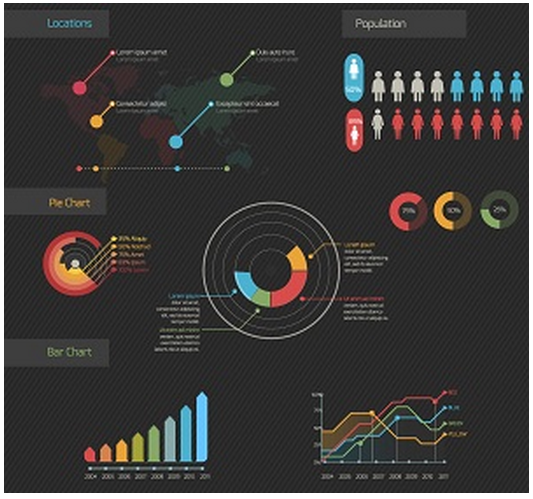
Charting a Course by Dr. Brian Capra Can a dashboard simplify Dr. Ben’s path to his dream practice? Pam’s expression was troubled. “Let me make sure I understand this, Dr. Ben,” she said. Ben smiled at her encouragingly. “You want me to find all this information every week and type it into a spreadsheet.” Ben smiled even harder. “I know it sounds like a lot of extra work,” he said. “I’m convinced that it’ll save us time in the long run, though.” “It’ll be extra work,” Pam agreed, “but I don’t mind that. I’m just not sure you’ve thought this through, if you don’t mind my saying so.” Ben stared. He was prepared for objections to the extra work or the tediousness of the task, but he hadn’t practiced any response to an announcement like this one. “What do you mean?” “Spreadsheets are all very well,” Pam said, “but what are you going to do with that information? We’ll put it all in and print it out and then what?” “We’ll be able to see if no-shows are increasing, for example,” said Ben. He felt himself getting irritated and tried not to show it. “We’ll see if there are things we need to change.” “With no-shows that might work, but what about the big numbers? We might not be able to see a pattern. And what if the numbers just sort of go up and down? What if there really isn’t any pattern?” Ben frowned. “We don’t have to print it out. We can leave it on the screen, and that way we can always do calculations or insert a chart if we need to.” “But we have nine different things we’re watching. If we look on the screen, after a couple of months we won’t be able to see the labels any more.” “You can fix that in Excel, right?” “I don’t know,” Pam said, opening her eyes wide. “I don’t think I even know how to do calculations in spreadsheets. I never took that kind of class.” Ben had never taken that kind of class, either. But he knew who had. “Just a moment,” he said to Pam, and he returned to his office. When Ben emerged later, he returned to the question of the spreadsheets with Pam. “We don’t need spreadsheets. We need a dashboard,” he said firmly. Pam nodded. “We need a dashboard that shows all the information to us in a simple, visual way so that it makes as much sense to us as X-rays do.” Pam was smiling now, too. “We need a dashboard that will not just show us the numbers. There are different kinds of charts that make the relationships within information clear. Like radar charts, which are kind of like spider webs showing how different pieces of information compare or connect. And trend charts, which show how something changes over time. And histograms–” “Have you been talking to your wife?” Pam asked. “I married a woman with a business degree, I admit,” said Ben, smiling. “The point is, we’re not back in the 20th century when we had to rely on spreadsheets. So instead of taking extra time to fill in the spreadsheets, please find an integrated system that will capture all the data and create a simple, friendly user interface that will make sense to us right away… or as soon as possible.” Dr. Ben got ready for his next patient. He felt sure that they were on track, even if he had gotten distracted by spreadsheets. Can a dashboard simplify Dr. Ben’s path to his dream practice? Disclaimer: For HIPAA compliance, all characters appearing in this post are fictitious. Any resemblance to actual persons or actual events is purely coincidental.
Check Out These New Network Members July 2014

One hundred fourteen new members across 68 practices joined Genesis Chiropractic Software and Billing Network in July 2014! Congratulations! There is strength in numbers due to the shared knowledge – we call it the “Billing Network Effect,” as the billing performance of each member practice improves in step with the total volume of processed claims. Please welcome our new Genesis network members: Sierra Byers of Absolute Health LLC, Scottsdale, AZ. Nina Rodgers of Action Chiropractic, LLC, Steamboat Springs, CO. Carri Moore of Advanced Chiropractic, Yuba City, CA. Alexa Desjarlais, Riley Klassen, Kim Lacoursiere, Miria Mattucci, Crystal McDonald and Dustin Whitney all of Alberta Preventative Health Services, Calgary, AB, Canada. Mary Damico of Aliante Chiropractic & Integrated Health, LLC, Las Vegas, NV. Josh Knotts of Align Health And Wellness, LLC, Brentwood, TN. Tammy Stang of Aligned Chiropractic Corporation, Kelowna, BC, Canada. Vicki Gutierrez of All About Chiropractic, Madison, WI. Rachel Kasdras of All Health Chiropractic Center Inc., Royersford, PA. Tonya Cota of Apex Chiropractic, LLC, Eau Claire, WI. Jennifer Dewitt of Back To Health Chiropractic And Wellness, Winona, MN. Quincy Knovak of Benchmark Medical Group, Inc., Windsor, CO. Sue Lefevre of Bold City Chiropractic, Jacksonville, FL. Karie Mabe of Brittian Chiropractic Center, PLLC, Winston Salem, NC. Holly Penna, Nikki Thompson, Samantha Ward of Dr. Glen R. Burford DC, Collierville, TN. Steve Bucci and Melissa Kahn of Camp Chiropractic, Inc., Middletown, DE. Kimberly Flores-Morales of Carolina Chiropractic Of Charlotte, LLC, Charlotte, NC. Janice Demers and Suzanne Demers of Carrollwood Family Chiropractic, Tampa, FL. Michelle Graham of Cascade Family Chiropractic, Colorado Springs, CO. Helen Bonilla and Janelle Cohen of Central Jersey Spine & Wellness, LLC, Freehold, NJ. Emily Hackett, Tracy Oppenheim, Jamie Pier, Lindsay Sison and Kristen Witham all of Chiropractic Works, Oakland, NJ. Cayla Sondrol of Clairton Family Chiropractic, Fort Worth, TX. Tiffany Bartram of Cornerstone Chiropractic, Charlotte, NC. Leiah Castillo of Elite Family Chiropractic, Charleston, SC. Amanda Aurich of Essential Care Family Chiropractic, Chesapeake, VA. Jenna Gall and Marcus Gall of Essential Family Chiropractic, Brighton, CO. Missy Trent of Family Healing Chiropractic, Charlotte, NC. Rosa Sanchez-Setticase of Fort Bend Corrective Health Center, Missouri City, TX. Ashley Epkes of Great River Family Chiropractic, Moline, IL. David Schlussel of Dr. Matthew Stuart Green D.C., Oakland, CA. Jessica Hofling of Greenleaf Chiropractic, LLC, Wichita, KS. Aubrey King of Greenwood Family Chiropractic, Greenwood, IN. Chris Lewis and Eric Roger Walker of Gulph Mills Chiropractic Center, King Of Prussia, PA. Janice Dunphy of Hawk Nation Chiropractic, Manchester, IA. Shelia Carey of Holland Family Chiropractic Center, PC, Richmond, VA. Victoria Farrell of Hubbardston Family Chiropractic, Hubbardston, MD. Erica Cash of Innerlink Chiropractic, Wixom, MI. Kristen Infantolino of Integrated Chiropractic, Chattanooga, TN. Kristen Tolmie of Kratz Family Chiropractic, Stoughton, WI. Meaghan Fabrycki and Ashley Lamoureux of Livingood Family Chiropractic, Cary, NC. Kelsey Sitzmann of Rohe Chiropractic Prof, LLC DBA Inspired Chiropractic, Sioux Falls, SD. Bernadette and Tara Hoopmann of King Family Chiropractic, Cape Coral, FL. Rebecca Gardner, Dan Laux, Dr. Jonathan Laux, Kathy Laux, Sue Koester, Chelsea Scoby, Lynette Spencer and Mike Wang all of Jonathan D. Laux, DC, Lima, OH. Dustin EJ Critcher of Lifestrength Family Chiropractic, PLLC, Naples, FL. Venetia Hayes of Louis C. Hilliard,DC, Smyrna, GA. Gwen Calderon of Maryland Chiropractic, Silver Spring, MD. Kim Williams of Maximized Living Foundation, Inc., Los Angeles, CA. Stacy Ackley, Courtney Bowers, Dr. Matt Hennessy, Leanne Jones, Dr. Mark Mccullough and Allison Osborne all of McCullough Family Chiropractic, Battle Creek, MI. Paige Wolfe of NCV, PLLC, Shelburne, VT. Amanda Hybner of Oak Hills Chiropractic, San Antonio, TX. Kathryn Gray of O’Dell Family Chiropractic PC, Webster, NY. Alejandra Barrientos of Optimum Spine And Health Clinics, PC, Salt Lake City, UT. Shanice Bell of Pacific Spine & Joint Medical Group, Inc., Daly City, CA. Jamil Abdur-Raoof, Bakari Dark and Dr. Harry Derr all of Paris Chiropractic, Rockville, MD. Melissa Klein and Joshua Poole of Planet Chiropractic, Douglasville, GA. Dr. Kevin Plummer of Pure Life Chiropractic, LLC, Eugene, OR. Kelli Tedder of Pure Life Chiropractic, P.C. – Dr. Johnathan Davis, Florence, SC. Anne Leiker of Shuemake Family Chiropractic, Centennial, CO. Stephanie Roloson of Symmetry Spine and Wellness Center, Alameda, CA. Lacey H. of The Health Factory PLLC, Knoxville, TN. Amy Pedretti of Three Rivers Chiropractic, Onalaska, WI. Aaron Bebee, Alexa Boyce, Becky Clark, Garry Jawanda, Courtney Jegla, Sarah Little, Tory Paulson, Ian Quartermus, Amy Wirth, Cara Wirth, Monica Wohlfert and Ryan Wohlfert all of Total Health Chiropractic, Lansing, MI. Andrea Faulkner of United Chiropractic, Myrtle Beach, SC. Katie Korin of Vital Energy Chiropractic, Helena, MT. Julieann Van Cleve of Michael A Winters, DC, Paducah, KY. Amy Hamlin of Woodbury Family Chiropractic, Woodbury, MN. Pamela Belmonte of Woodland Family Chiropractic, LLC, Kentwood, MI. Kelsey Hughes and Michelle Magana of Zenaptic Chiropractic, Vancouver, WA.
Chiropractic Practice Management Decision Making

Wake Up and Smell the Coffee Dr. Ben might be able to make better decisions by tracking KPIs — but would it be worth it for practice management? “Do you really cut out coffee in the break room when cash flow is tight at the practice?” Carmen asked Ben, pouring him a cup of her special brew. Ben inhaled the aroma of freshly ground coffee beans brewed in a French press with filtered water. Their son was coloring at his end of the table while Ben and Carmen enjoyed a cup of coffee, the family’s usual evening ritual. “Why not? It’s a small thing that doesn’t affect the patients,” said Ben, breathing in the scent of coffee again. It would be just another minute before it reached the ideal drinking temperature. “I think that’s a mistake,” Carmen said firmly. “What happens when everyone is crazy busy all day and the waiting room is a zoo and Pam goes for her coffee break — and finds no coffee. You save yourself seven dollars, and you have a dissatisfied staff. That’s no bargain.” “So where should the savings come from if we need to scrimp a little bit? Sometimes we have to.” “There’s always something you can do to bring in a little more money in the short term,” Carmen said, swirling her cup. “You can call patients you haven’t seen in a while and invite them in, or offer a referral bonus or something.” “This isn’t like pizza,” Ben objected. “Plus, we don’t always have too little business when we have a cash flow issue.” Carmen frowned. “The solution to every problem in business is more customers. Cash flow for the pizzeria means we’ve had a slow week. It’s not that way at the practice for practice management?” “Not necessarily. There are a lot of things that can affect our income. No shows, for example. When people make an appointment but don’t show up, we lose that income. NFAs, no future appointments — those are the people who may have been coming regularly and providing predictable revenue, but then they leave without making another appointment.” “Recurring revenue is good,” Carmen agreed. “But when you expect it and it doesn’t happen, it can take a while to make up the difference.” “There’s also payment. When people order a pizza, they pay for it. We have accounts that are 60 or 120 days late, plus insurance payers who are slow or even dispute the claims.” “Hold on!” Carmen grabbed a piece of paper and a crayon from Jonathan’s hoard. “Can I have this one, sweetie? Thanks. Okay, Ben, let’s get this figured out. Things affecting your income include no-shows, NFAs, slow pays, and payers like insurance companies that aren’t always predictable. It’s all practice management.” Carmen drew a neat chart with the crayon. “Wait, I think the insurance companies need their own column. You need to keep track of which payers are fast and cooperative and which aren’t. You also need to know how many claims you have and when there’s a significant backlog so you can respond to it. Maybe also which specific procedures cause problems with which payer.” Ben admired the chart. “Looks like that about covers it.” Carmen sat back and admired her work. “I think these are your KPIs. Your key performance indicators that let you see if you’re on track and if you need to trim your costs a bit.” “Where will these numbers come from?” Ben asked. “You’re acting like I should know these things.” “You should,” Carmen shot back. “You have to know your numbers to make the right decisions at the right time. When you know your numbers inside and out, you can make strategic decisions wisely. Maybe there are vendors you can safely put off paying if you know that you have money coming in soon, or maybe you can put a staff member to work getting those overdue accounts cleaned up.” Carmen returned the crayon to their son. “Either way,” she went on, “you won’t have to mess with the coffee!” Ben drained his cup. He could see where Carmen was coming from. Her plan sounded sensible. But he wasn’t sure it would be worth taking time away from what he did best — patient care — to mess with all those numbers. Dr. Ben might be able to make better decisions by tracking KPIs — but would it be worth it for his practice management? Disclaimer: For HIPAA compliance, all characters appearing in this post are fictitious. Any resemblance to actual persons or actual events is purely coincidental.
Chiropractic Software Dream Practice Analysis Happiness

Happiness is a Dream Practice resulting from a Dream Practice Analysis and a map to get there. Has Dr. Ben considered all the possible returns on his investment? “Honey, I’m home!” Ben sang out theatrically as he opened the door. His son came running, with his wife not far behind. “How’d the Dream Practice Analysis go?” Carmen asked. Her beaming face showed the answer she was anticipating. Ben swept her into an embrace and gave her the answer she expected. “It was great. Really useful.” They settled onto the sofa and Carmen pulled their little boy onto her lap. “We went over the distinction between return on investment and expenses,” Ben went on. “Did everybody get the concept?” Carmen asked. “I really think they did,” Ben said. “It’s completely clear to me now, too. And then we looked at our practice stats compared with general industry and product information. That was really eye opening.” “It can be so hard to get the information!” Carmen remarked. “It’s great to set benchmarks, though.” “I don’t think we’ve ever heard that data before,” Ben agreed, “and I think everyone felt that sharing our information was worth it — the value of the information we got was excellent, and I don’t think we could have gotten so many highly relevant insights without sharing.” “That makes sense. However much expertise people have, they can’t really speak to your needs if they’re just talking in the abstract. “We had a good talk about the most useful metrics to follow, too, and how we can capture and use the data we need to be able to examine the different dimensions of the practice metrics that make the most sense for us.” “Sometimes figuring out what to measure is the hard part,” Carmen observed. “It sounds like the process was very useful. What about the product?” “They shared some opportunities and even some guarantees. We have to thrash it out, of course, but I think we’re ready to make an informed decision, with the Dream Practice Analysis.” “That’s wonderful!” “I’m feeling very optimistic. It seems like things are really looking up at the practice, and this could be a turning point for us.” “Disney World for our vacation this year?” Carmen asked slyly. Their son perked up. “Could be!” Ben smiled. “How about mini golf tonight?” Jonathan jumped down and ran to the door. Carmen hugged Ben. “I think that’s a great idea, but you know what? The best part is seeing you happy.” Ben smiled down at his wife. That was a kind of ROI he hadn’t thought about. Has Dr. Ben considered all the possible returns on his investment? Disclaimer: For HIPAA compliance, all characters appearing in this post are fictitious. Any resemblance to actual persons or actual events is purely coincidental.
