
Improvements to the Genesis SOAP note coding
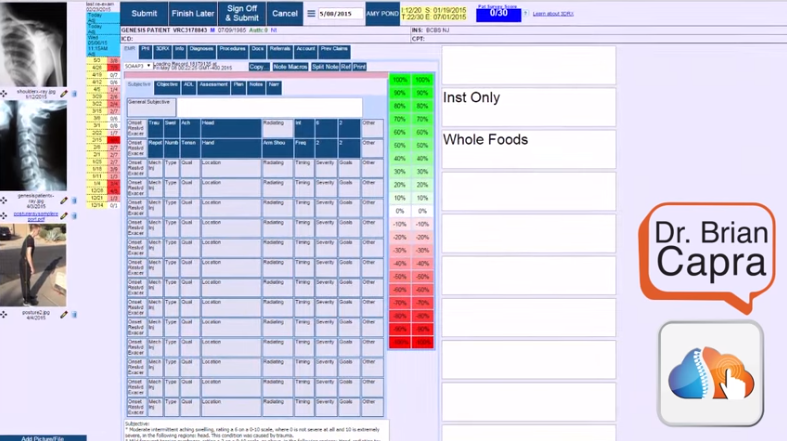
Dr. Brian Capra quickly demonstrates an improvement to the Genesis SOAP notes coding feature. If you click the new button with an arrow on it, then you can copy the diagnosis codes and the procedure codes from your chiropractic documentation SOAP note to the billing claim.
Proactive Technology for a Proactive Profession
Chiropractors are by our nature proactive. For our patients, Chiropractic is a new way to look at health. We educate our patients about the necessity of caring for their spine and nervous system in the prevention of health problems. It is therefore ironic that the one area where this has not been true has been in the technology and software we have used to operate our practices. This one area that is vital to the health and success of our business has instead been relegated to old methodologies, old ways of building technology, and ineffective, reactive approaches. So, what does it mean to have a proactive technology? How can changing from a reactive to a proactive approach improve the management of the patient experiences and result in 62% higher collections per visit, 26% better patient retention, and 32% higher documentation compliance? Let’s look at it from the same perspective as a patient being introduced to Chiropractic for the first time. Do they think it’s possible, when they come in for their lower back pain, that what they are about to learn could totally revolutionize their health? No. Do they know that it could improve the function of their body and therefore alleviate the headaches they’ve had all their lives, improve their child’s asthma, and lower their husband’s high blood pressure? Of course not. They don’t even think it’s possible to get those kind of results because they have an outdated health paradigm, or an outdated technology. They are looking at it from a reactive paradigm. Yet, when these same patients are educated and begin to learn about the spine, the control the nervous system has over the functioning of their bodies, and the way Chiropractic benefits their overall health, then it all starts to make sense. From their new proactive paradigm, they are able to understand and achieve improvements in their health that they would never have thought possible before. It is the same when you look at the technology used to manage your Chiropractic office. With the out-dated, reactive system used in so many practices, you have to go find what work needs to be done before you can do it. If you want to follow up on an insurance claim, you have to go to some aging report, find the claim, and then work through the steps. This means you have to probe and actively go find the work before you do it. No one knows, including the owner, how much work was supposed to happen that day versus how much actually did happen. You have cash flow reports, no-show reports, no future appointment reports, expired care plans, compliance reports, billing reports. The list of reports to check the work of a single day is exhausting. Even worse, this type of system leaves you always reactive. You are never preventing problems and encouraging growth. You are just putting out fires. But, with a proactive technology, your office operates from a whole new paradigm. In my next post, I will walk you through and demonstrate how this new proactive paradigm leads to the proven results I mentioned earlier – higher profits per visit, retention, and compliance.
The New Chiropractic Technology I Found That Changed The Way I Practiced Forever
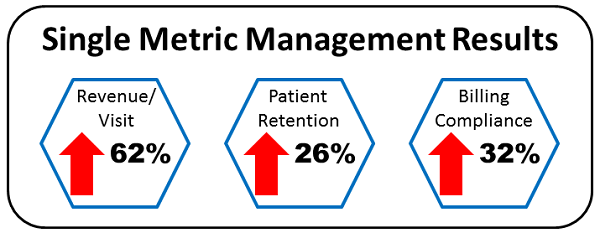
I have told you the story of how losing a patient led me to focus on the patient experience. We’ve talked about how Big Business is using technology to manage and improve their customer’s experience and why Chiropractors have fallen behind, unable to compete without the same enterprise level technology used by the Big Boys. Now, I would like to explain how I was able to gain access to that same enterprise level, multi-million dollar software and implement it not only in my own practice but to begin offering it to other chiropractors who want to quantify and improve their own patient care experience. As I was searching for ways to improve our patient care, I tried implementing the other chiropractic technology that was available. What I found was that it was antiquated in its processes and impossible to use to keep track of any real metrics that would allow me to make improvements. We would still lose a patient and I would go to one of the reports available in the software, find no-shows, expired care plans, or one of the dozens of other reports I would have to search through to discover what went wrong. Then, my staff and I would focus on the reason that patient was lost until we lost another patient for a different reason. It was basically management by fire and it is not how real businesses operate at a high level. That is when I had the good fortune to meet a former CIO of a top-five financial firm on Wall Street and his son who was a Princeton grad with a computer science degree. They were building chiropractic billing software for insurance billing and as soon as I saw what they had accomplished, I knew we needed to deploy it in my clinic. We implemented it in my office alone and my collections doubled. Even more important, it actually leveraged web-based technology and artificial intelligence, learning over time to find necessary billing tasks and delegate them automatically to the right staff member. This meant that my staff and my billing team no longer had to search through piles of reports to find out what work had been done and what had fallen through the cracks. This new technology was allowing us to use the workflow methodology. The system could now find patients who were at risk of being lost. A no-show would become a task assigned to one of my staff members. An expired care plan would be delegated to the appropriate person. A daily SOAP note that was not signed by the doctor would create a task assigned to be handled. That meant that at any moment, my staff and I could see exactly how many tasks were outstanding to manage our patient care experience at the highest level. Now remember my patient Chris. When I saw how this technology drastically changed my billing departments results, I knew I had the answer to helping other doctors with the same patient experience problems that resulted in losing Chris. We began building upon the billing workflow methodology and expanded it to the overall patient experience. The reality is there are three main categories of work every practice has to perfect to improve the overall patient experience. Not just insurance billing. Insurance billing is a subset of main category number one which is Revenue. Other subsets of revenue workflow include cash collections/recurring payment and inventory management for example. The three main categories of the patient experience are Revenue, Retention, and Compliance. I will go into each of these in more detail in future posts. Our new enterprise level technology was automating these three main categories and boiling it down to a single number. The number of tasks that needed to be completed by the end of the day for the perfect patient experience. It was no longer management by fire. Instead it had become single-metric management. Either the number of tasks left to do was zero or it wasn’t. Either every task to make our patient care experience the best it could possibly be had been done or they hadn’t. And, if a task had not been completed, I could immediately see what the task was, who it was assigned to, and follow-up. No more digging through reports. What does this mean to the average practice? Today hundreds of practices across the country are using this new Single Metric Management Methodology and seeing the same benefits I did. Specifically, an average increase in Revenue/visit of 62%, an average increase in Patient Retention of 26% (Average visits a patient is seen before leaving the practice), and an average increase in Compliance of 32% (Documentation and Billing). In future posts, I’ll go over in detail the data analysis we did that proves these numbers. Some “side effects” of Single Metric Management include a drastic reduction in wasted staff hours looking for work, an overall improvement of staff satisfaction, and conversely, a decrease in staff turnover, a decrease in management hours since many meetings are now eliminated, and an increase in a provider’s free time to do with what they wish. Most importantly providers are able to deliver a patient experience that rivals the customer experience seen in the best businesses in the world. The operations of my office had become efficient, effective, and scalable thanks to the implementation of this new single metric management workflow methodology. We had moved from being reactive, trying to fix the problems after losing a patient, to being proactive and making sure everything was done in real time to keep our patients. It became crystal clear that leveraging enterprise level technology to quantify and improve the patient experience had the power to completely change the way chiropractic offices function, decrease the stress of management, enhance patient retention, and above all, improve the care or experience patients received.
Put a Stop to Memory Management and Missed Visits For Good!

How Do You Keep Track of No Shows for Your Chiropractic Practice? A Chiropractic Practice relies on separate reports and paper notes for following up on patient no shows. Who’s responsible to call the patient when they miss their appointment. Do they call right away or do they put it off? Who follows up with that person to make sure that they did it? Imagine never using a report to find out who missed their appointment. Imagine a tool that tells your staff exactly who to call and for what reason. Imagine that this process was automatic. Imagine 100% follow-up with every patient. Imagine the increased revenue for your Chiropractic Practice when you re-schedule every no show. Well, imagine no more. The tool is called Genesis Workflow and you can learn about it in this 20 minute webinar. It will be time well spent.
How to Create a Patient Experience Like The Biggest Business in the World

We talked about how Big Business is using Big Data to measure, track, and manage the customer experience. Amazon, Apple, Zappos and many others are making sure that every customer interaction is analyzed and quantified to continuously improve. In the process they are building a huge base of loyal customers and grabbing more and more market share. So, why in a profession like Chiropractic that is so rooted in taking care of our patients, has the patient experience been an afterthought? To answer that question, you have to look at the basis big firms use to manage the customer experience…Big Data. Big Data uses technology and software that tracks every interaction and critical task, analyzes it, and breaks it into easily actionable information. This process is what has made it possible for Big Business to not only understand and react to their customer’s current preferences but also to anticipate the customer’s future needs, innovate, and adapt quickly to market changes. This enterprise level methodology focuses on three key things – People, Processes, and Technology. It is a secret that Big Business has known for years. The technology they use does not come cheap. In fact, each company continually invests tens of millions in their software to achieve that perfect customer experience. Knowing this, it’s easy to see why individual chiropractors and other small businesses have not been able to keep up and also why the management of the patient care experience in most chiropractic offices has not achieved the attention it deserves up to this point. The Chiropractic software on the market now is 20 years behind, an eternity in the technology race. And, current practice management technologies are built on antiquated software platforms, written in old software languages, and not in the cloud. This makes them impossible to update. Most chiropractic software today is built to sell licenses to doctors rather than to help chiropractors create an enterprise level patient experience. Without this “enterprise level” technology, Chiropractors have unknowingly been stuck in a time warp. We have been left to rely on lists of things that need to be done each day, laying the burden on our staff and our own memories for follow-up and follow through on important patient experience tasks. At best, some Chiropractors may have been using outdated Chiropractic software to print endless reports to go through and check task completion. Insurance billing, unpaid claims, missed patient visits, expired care plans…To read every report necessary to ensure that all tasks effecting the patient experience have been completed is impossible. Adding even more difficulty, Chiropractors must act as both the business owner and an active employee. This is like being the conductor of the orchestra and the violin player. There is not enough time for the Doctor to do their own work and manage the staff. Effective management consists of three steps: quantify, delegate, verify. With a reliance on an endless number of reports that there is never enough time to even look at, there is no possible way to complete all three management steps for every task that is critical to the patient experience. Without completing these three steps of quantify, delegate, and verify, Chiropractors cannot complete the most important step – analysis of the results and improvement of their process. When the patient care experience is not improved and modified over time, Chiropractors are unable to take their business to the next level. They are stuck guessing about what does and doesn’t work without any real data to back up their decisions. They manage their business like treating symptoms, putting out fires but never getting to the cause of the problem. Their process never becomes systematic and scalable. Instead, it depends wholly on their own energy to drive its growth and sustainability. If that approach isn’t good enough for Big Business, why should it be good enough for us as Chiropractors. We have a duty not only to ourselves, to make our practice successful, but also to our patients, to give them the best patient experience possible. To do this, Chiropractors must use the same technology and software methodologies employed by companies like Amazon and Zappos. We have to start leveling the playing field and apply the principles of Big Data in our own practices. Patient experience has to become the call to action in Chiropractic that customer experience is in Big Business. And, it has to happen now. When we add in Chiropractic software and billing at the enterprise level of technology used by Big Business, the results are a predictable patient experience, increased patient loyalty, scalable operations, increased patient retention, improved patient compliance, more revenue per visit, , more patient referrals, decreased management time, and increased staff efficiency. Isn’t that what we all want for our business and our patients?
Chiropractic Biophysics Suite Documentation Demo Video

Use the Chiropractic Biophysics Suite for Your Chiropractic Documentation! Is your chiropractic documentation slow? Do you type a lot? Dr. Brian Capra introduces Dr. Jason Haas who demonstrates the CBP Suite Documentation built into Genesis Chiropractic Software. Watch Dr. Jason as he goes through every option available to you on his touch screen.
The Secret to Never Missing Patient Payments and Insurance Collections

Maximize your Insurance Collections for Your Chiropractic Practice! Chiropractic insurance collections is a hot topic. Chiropractic Practices rely on separate reports and manual processes for follow up on patient payments and insurance claims. If you look at a report that lists hundreds of your outstanding insurance claims, how do you tell which claims need follow-up and more importantly, what information do they need from you to be corrected and resubmitted? Imagine never using a report to find out what an insurance claim is missing. Imagine a tool that tells you exactly what to do to correct the claim, and then resubmits it for you with a click of a button. Imagine the increased revenue for your Chiropractic Practice. Imagine the time savings that you can now spend with your patients. Well, imagine no more. The tool is called The Genesis Provider Workbench and you can learn about it in this 22 minute webinar.
Chiropractic Business Tips: How Big Business is Focusing on the Customer Experience

How’s the Chiropractic Patient Experience at your office? For Big Business, there is one thing that is surpassing all other marketing efforts and that is the customer experience. Major firms are investing millions into “Big Data”, developing software and technology to quantify, track, and manage the customer experience in a bid to increase customer satisfaction, loyalty, and of course, the bottom line. From Apple to Amazon to Zappos to the Ritz Carlton, large companies are turning away from traditional customer service models and using cutting edge technology to ensure every customer interaction is managed down to the smallest detail. Just look at how four of the biggest names at the forefront of customer experience have changed the landscape of customer interactions forever. From the very beginning, Amazon CEO, Jeff Bezos, focused on the customer first saying, “We start with the customer needs and work backwards.” Amazon’s technology allows them to capture huge amounts of data on every customer interaction, letting them anticipate real-time customer needs, like with their “Frequently Bought Together” and “You Might Also Like” sections. The information they capture also helps Amazon respond to changing customer needs and innovate to stay ahead of the competition. One of the first pioneers of the customer experience, Apple has broken down each customer interaction into 5 steps. Each step must be completed by a staff member to create a successful customer experience and achieve their goal of “a customer for life”. This customer-centric focus has made Apple the most profitable retailer, with the highest revenue per square foot of retail space, on the planet. Ritz-Carlton is another major company who has broken down the steps of each process they use to create a perfect guest experience. From their 3 steps of service required for every interaction with a guest to the over 30 steps housekeepers must complete just to make the bed, staff members know exactly how many tasks are necessary to achieve Ritz-Carlton perfection. And, not to be left out of the Big Data drive, every Ritz-Carlton employee is trained to use a database that keeps track of guest preferences from favorite drinks to bedtime snacks, allowing them to completely customize every guest experience. Even before their acquisition by Amazon, Zappos founder, Tony Hsieh, literally wrote the book on managing the customer experience. Zappos uses technology to track customer behavior, personalize each experience, and create the “Wow factor” the company is known for. Using Big Data, all four of these companies are applying and adapting to customer feedback. From improving their products and services and finding new opportunities for growth, to personalizing the customer experience, large companies are leveraging technology to capture market share and increase revenue. The question we have to ask ourselves is, with this push by Big Business to manage and improve the customer experience through technology, are small businesses being left behind, unable to compete?
Seal Your Chiropractic Revenue Leaks

Learn how to track your Chiropractic Billing Performance and it’s impact on your office workflow, billing workflow and your billing results. The big secret is the Genesis Billing Stats Report. Read the transcript: Jess: Hi, my name is Jess, and welcome to today’s webinar on tracking revenue for your practice. Conducting today’s webinar are Kathy Casbarro, the head of our SWAT team who has 30 years of experience in Practice Management, and Jason Barnes, our Chief Operating Officer who is responsible for the billing performance for 500 practices. Welcome, Jason and Kathy. Jason: Hello, thank you for having us. And we’re really excited about this whole series of webinars that we get to put on. More importantly, Jess, is that we’re more excited about helping the entire chiropractic profession. When it comes to running a practice these days, we understand how many balls that a practice owner has to juggle. And for those of you on the phone today, we get to personally hear those stories. Kathy, who I’ve worked with now for four years, and I get to interact with practice owners on a regular basis, talk to them about their frustrations, about their successes, the things that really drive them. And the fact that the mission that the entire chiropractic community shares for changing healthcare is really the main driver, makes the talk of money seem sometimes misplaced. But we know that without a solid financial backing, that mission will never be realized. So, we want to start from that perspective today and really make sure that by talking about money, we can help achieve that dream, that mission, that we share with chiropractors. And Jess, let’s get to the next slide here. We wanna start out by helping practice owners understand what we’re trying to do. As an organization, we help practices in a number of different ways, scheduling, billing, documentation, and practice management. But today, we wanna focus on the revenue portion of that. We can’t break out just the billing without talking about your scheduling process, the intake process. When you’re talking about sealing revenue leaks, looking at the entire practice as a whole has to be part of the approach. And Kathy and I, working together over the last few years, know that when you’re talking about office workflow or billing workflow, they’re really the same conversation most of the time. We separate them in this context to help people understand that when you’re looking at lower collections than what you’re expecting, that can be a frustration that can be scary because we know practices that can’t last for more than just a few months without writing that chip. So, today, we wanna focus on understanding where in your process their breakdown occurred so that we can specifically identify it and then figure out a plan to solve it. But identifying it is without a doubt the first key. So, knowing where you’re reimbursement gets stuck, as Kathy and I have worked together, Kathy, when you talk to practices, what’s the biggest frustration you get from practice owners when they’re not realizing the collections that they thought they would have? Kathy: It’s when they’re not, you know, they can’t continue to treat their patients the way they want to, you know, being able to continue with their mission, so the frustration is that they need to bring in the money in order to continue that mission to help every patient that they have in their practice and, you know, that can be a problem for them. Jason: Yeah. So, when that frustration happens, maybe their heart is not into treating the patients the way they wanted to because they’re worried about whether or not they can keep the doors open. We’ve actually had those conversations. I don’t wanna be overdramatic about it, Kathy, but it’s unfortunate. We’ve seen people forced to sell their practices and move backwards back to the role of associate while they figure out how to attack the problem again. We wanna help people avoid that. We wanna see the chiropractic profession really explode, and I think we’re in a good position to help there. So, keep in mind, just kind of recap as I go through this, coming up with a process that’s repeatable for your office workflow, your intake process, is the only way that sealing your revenue approach that we came up with works. If you don’t have a set process, then there’s really difficulty in trying to diagnose it. But you have to make sure that you understand the connectors you’re looking at. So, some of the examples that we’re talking about today is CPT codes. Am I in or out of network? Am I gonna get paid a certain amount? Do I know what that amount is supposed to be? We need to ask those questions and then be able to track the data across many months. And we deal with the smaller, you know, one chiropractor, part-time front office practices, and we got 10 locations, I’ve got 22 chiropractors, 6 physical therapists, I’ve got weight loss, and I need to make sure all of that is running together. So, the difference between them is actually really, really small. Because the intake process, the data collection process that you have to follow is nearly identical. But now we have to track whether or not the breaking points are the same. And in our experience, they’ve been really, really similar. So, Jess, can you hit the next one for us? We know that you can’t operate and fix the problem at the same time. So, the amount of time that it takes you to come up with a root cause analysis of where your practice went wrong is critical. It’s critical to you enjoying a family life or work outside of your office. Kathy, with some of the more complex problems, how much time does it take to actually figure out where the process is broken
Own the Phone with Spencer Peller

Spencer Peller is the Co-Founder and CEO of YesTrak and Founder and CEO of MyDoctorCalls. He is also the author of the new book Own the Phone! Today’s training is all about your telephone! If you’re a business owner, you know how important your telephones really are. This training will help you understand every aspect of answering the phone. It’s also a great training for your staff, so make sure you send this link to them and tell them to watch it. Click the interview below to get started… For more information about YesTrak: Visit: www.YesTrak.com Call: (800) 620-5877 Send email to info@yestrak.com
